Product Description
Built in Stone. Defined by Vision. Remembered Through Time.
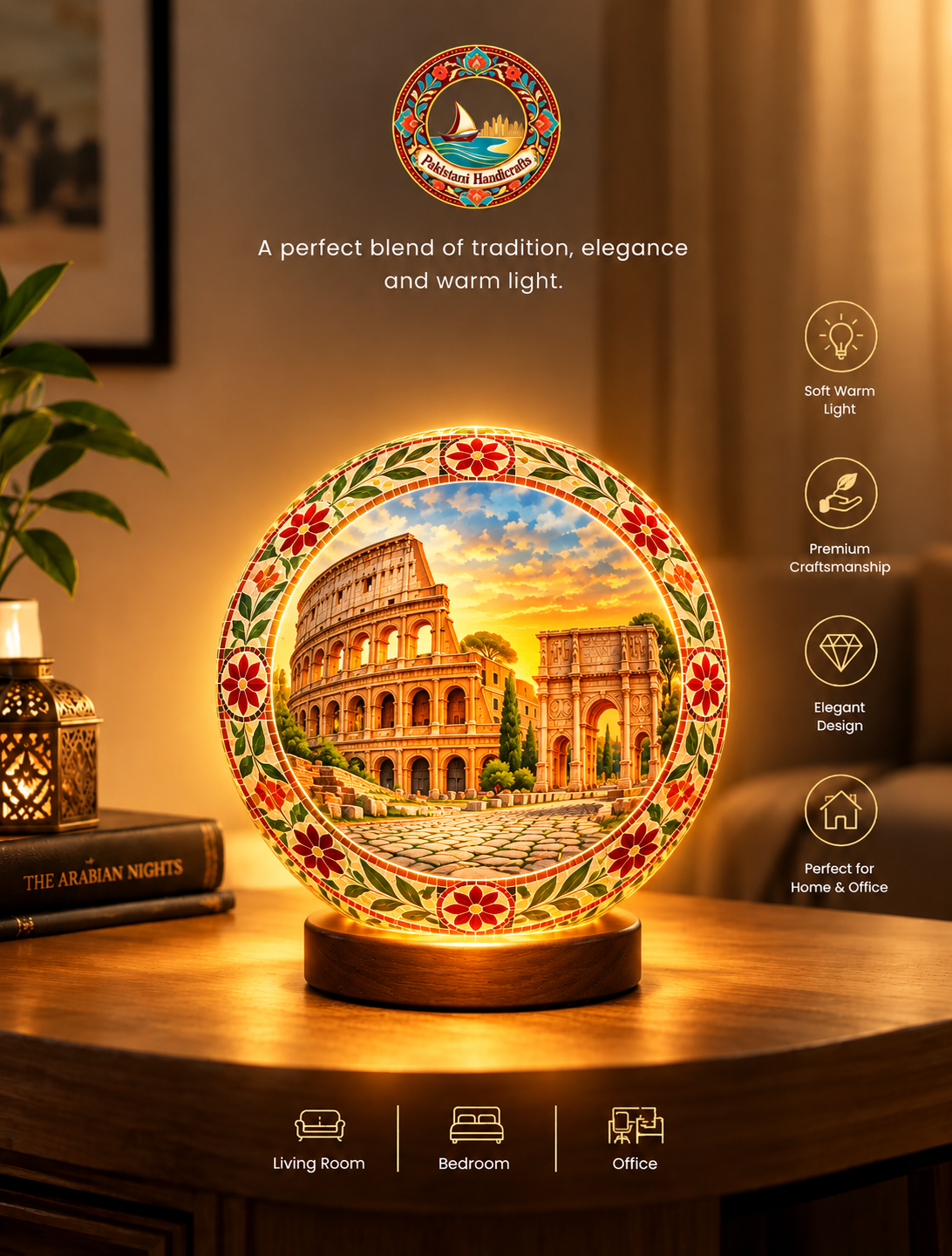
The Roman Rome: City and Stone — The Legacy of an Empire handcrafted lamp celebrates the architectural ingenuity, engineering achievements, and enduring influence of ancient Rome.
Inspired by the monumental structures and urban traditions that shaped the Roman world, the design transforms the visual language of ancient Rome into a richly layered illuminated cityscape.
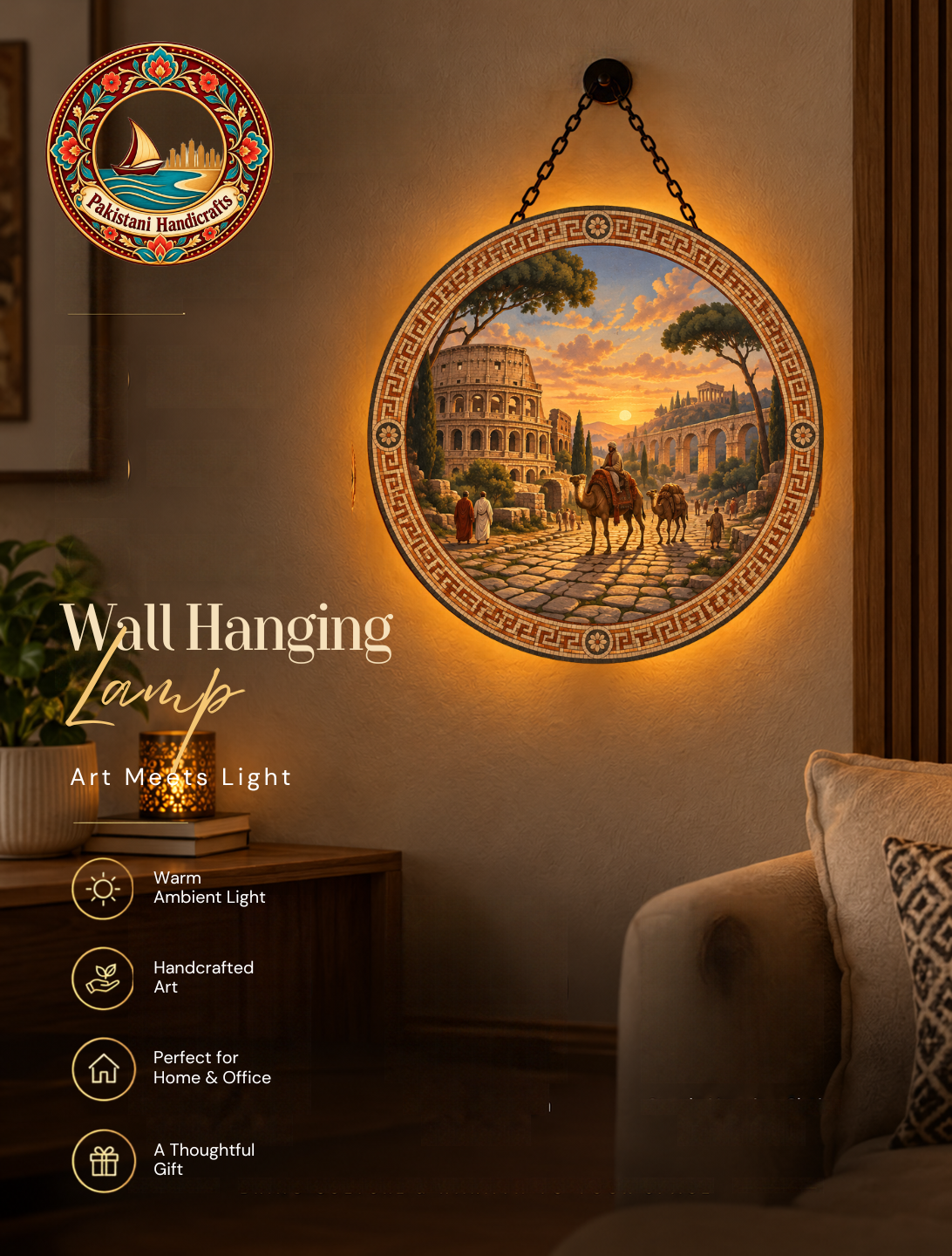
At the heart of the composition stands the Colosseum, one of Rome’s most recognizable monuments. Its monumental form represents the scale and ambition of Roman public architecture and evokes a civilization that transformed its cities through extraordinary construction.
Surrounding the arena, a sequence of stone arches introduces one of the most recognizable architectural forms associated with Roman building traditions. Their repeated rhythm creates depth within the scene while emphasizing the strength, structure, and visual order of Roman architecture.
A carefully composed stone road leads through the cityscape, suggesting the extensive networks that connected Roman cities and territories. More than a pathway, the road represents movement, communication, trade, travel, and the expansion of an interconnected world.
An aqueduct adds another important dimension to the composition. Representing Roman expertise in water infrastructure, it reflects the engineering knowledge required to transport water and support the growth of urban communities.
Together, the Colosseum, arches, road, and aqueduct create an imagined architectural landscape that brings multiple aspects of Roman civilization into one scene.
When illuminated, the warm glow emphasizes the texture of the stonework, the repetition of the arches, and the monumental scale of the structures. Light and shadow add depth to the architectural forms, creating the atmosphere of an ancient city emerging from the darkness.
The composition intentionally combines several architectural ideas inspired by Rome’s surviving monuments and historic building traditions. It is an artistic interpretation rather than a reconstruction of one specific historical viewpoint.
More than a decorative lamp, Roman Rome: City and Stone is a tribute to human ingenuity — a celebration of how architecture, engineering, infrastructure, and ambition can leave an influence that survives long after the civilization that created them.
Design Concept
Ancient Roman Architecture Meets Sculptural Cityscape Design
The concept behind Roman Rome: City and Stone is centered on the idea that a city can become a lasting record of human ambition.
Ancient Rome is remembered not only for its political and military history, but also for the monumental structures, infrastructure, and architectural principles that shaped its urban environment.
This lamp brings several of those visual ideas together to create an imagined Roman cityscape where architecture becomes the storyteller.
The Colosseum — Monumental Public Architecture
At the center of the composition stands the Colosseum, serving as the dominant architectural focal point.
Its immense scale represents the ambition of Roman monumental construction and the importance of large public structures within Roman urban life.
The arena also provides a strong visual anchor for the surrounding architecture, allowing the viewer to understand the scene as a city built around monumental spaces.
Within the concept, the Colosseum represents scale, ambition, public architecture, and the enduring legacy of Roman construction.
The Stone Arches — The Language of Roman Engineering
The repeated stone arches create the structural rhythm of the design.
The arch became an important architectural form within Roman construction, allowing builders to create strong and durable structures while also producing distinctive visual spaces.
In the lamp, the arches extend beyond decoration. Their repetition suggests the organized and systematic approach that characterized Roman architecture and engineering.
They symbolize strength, structure, order, and technical innovation.
The Road — A Network Connecting the World
Running through the composition is a carefully constructed stone road.
The road introduces movement into an otherwise monumental architectural scene.
It represents the networks that connected communities, cities, and territories, allowing people, goods, information, and armies to move across vast distances.
Within the artistic composition, the road becomes a symbol of connection, expansion, movement, and exchange.
The Aqueduct — Engineering in Service of the City
The aqueduct represents another side of Roman ingenuity.
While monumental buildings demonstrated Rome’s architectural ambition, water infrastructure addressed the practical needs of growing urban communities.
The aqueduct therefore introduces an important idea into the design: great civilizations are built not only through impressive monuments but also through systems that allow cities to function and grow.
It symbolizes engineering, innovation, infrastructure, and human problem-solving.
Stone — The Material of Endurance
Stone is present throughout the composition, tying the different architectural elements together.
Its weight, texture, and permanence contribute to the visual identity of the lamp while reinforcing the central theme of endurance.
Stone becomes a metaphor for the legacy of Rome itself — structures may weather and civilizations may change, but the physical remains of a city can continue to tell its story.
Light — Revealing the Architecture
Light plays an essential role in the experience of the design.
The warm illumination travels across the stone surfaces, revealing the arches, road, arena, and aqueduct through contrasting areas of light and shadow.
This creates a sense of depth while giving the architecture a sculptural quality.
Symbolically, the light represents discovery and remembrance — allowing the viewer to look closely at the structures and consider the human ingenuity behind them.
The Meaning Behind the Design
At its heart, Roman Rome: City and Stone is a celebration of how architecture can outlive the moment in which it was created.
The visual journey moves through:
Monument → Architecture → Engineering → Infrastructure → Connection → Legacy
Each element represents a different aspect of Roman civilization, while their combination creates a broader story about the relationship between human ambition and the built environment.
Symbolism
- Colosseum: Monumental public architecture, ambition, scale, and the grandeur of Roman urban life.
- Stone Arches: Structural innovation, engineering, strength, and architectural order.
- Road: Connection, movement, communication, trade, and expansion.
- Aqueduct: Engineering ingenuity, infrastructure, and the practical development of urban communities.
- Stonework: Permanence, endurance, and the physical legacy of ancient Rome.
- Warm Illumination: Discovery, remembrance, and the revealing of architectural detail.
Ultimately, Roman Rome: City and Stone is more than a decorative lamp. It is a sculptural tribute to a civilization whose architectural ideas and engineering achievements continue to influence the way we understand cities and structures today.
It is designed for history enthusiasts, architectural collections, libraries, offices, contemporary interiors, museums, study spaces, and premium gifts inspired by ancient civilizations and the enduring power of human ingenuity.
 Doha, Qatar
 Cash on Delivery in All over Qatar




Reviews
There are no reviews yet.